
Real Pool 3D
EivaaGamesSports
4.44.16K Reviews
- Version
- 3.29
- Installs
- 5.00M
- Age Rating
- Everyone
Screenshots
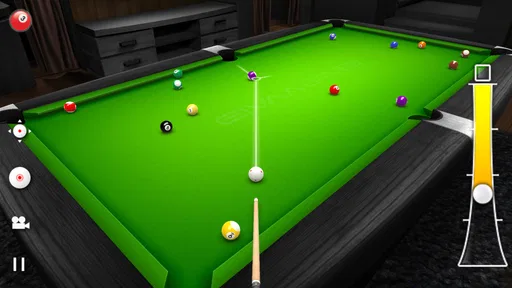
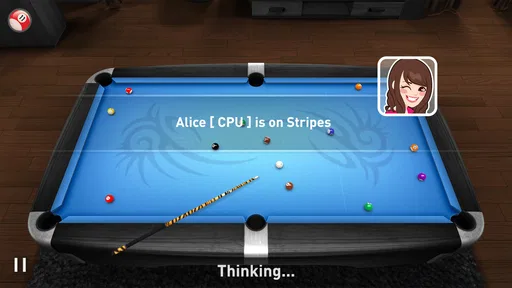
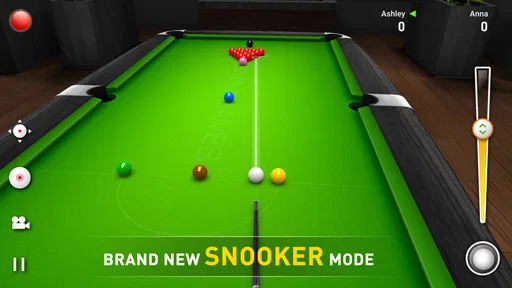
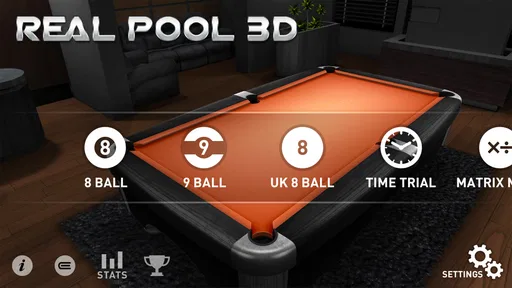
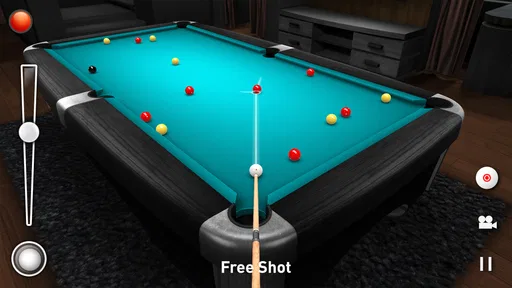
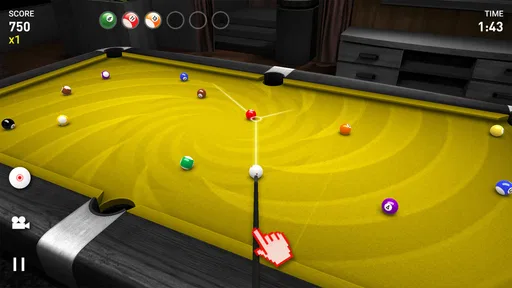
Our Review of Real Pool 3D
 Analysis by Appyee
Real Pool 3D is the kind of sports game I open when I want a focused pool match without committing to a long session. It puts the table at the center of the experience, with play against friends or AI opponents, and its simple presentation makes the basic idea immediately understandable. I found the appeal less about collecting extras and more about lining up a shot, judging the angle, and deciding how much power to use.
As a free game from EivaaGames, it is easy to try without turning the first session into a purchase decision. The audience is broad too: its age rating is Everyone, and the game belongs to the sports category rather than trying to be a large, story-driven arcade package. My overall impression is that it works best as a pocket pool table for short breaks, casual matches, and players who enjoy improving through repetition.
How the game feels during a normal session
The first thing I noticed is how quickly the central activity becomes clear. Pool games do not need a complicated tutorial to explain their basic rhythm, but the difference between a merely playable table and an enjoyable one comes from how comfortable it feels to aim and adjust. Here, the experience is built around taking time over a shot, reading the table, and accepting that a small mistake in positioning can affect the next turn.
That makes the game more thoughtful than a simple tap-to-score sports title. I can play casually, taking obvious shots when I am relaxing, or slow down and treat the table like a small puzzle. The AI option is especially useful for solo play because it gives the game a purpose when nobody else is available. I would not approach it expecting a full simulation of every aspect of professional billiards, but I do find enough decision-making to keep ordinary matches from feeling completely automatic.
The developer, EivaaGames, has kept the concept direct. That is a strength when I want to start playing quickly, although it also means people looking for a large career structure, extensive customization, or a deep collection of modes may find the experience narrower than expected. The game’s identity is the pool match itself, not a broad sports management package.
Speed expectations before you start playing
In everyday use, the game feels suited to quick access. A pool match naturally breaks into individual turns, so I can play for a few minutes and stop without losing the sense that I made progress. That is more convenient than sports games that require a complete fixture or a long sequence before reaching a satisfying stopping point.
The perceived speed also depends on how I play. If I rush every shot, the session moves briskly, but the game is more enjoyable when I use the aiming time to think. The short pauses between decisions are not wasted loading time; they are part of the sport. I would describe the pace as controlled rather than frantic, which suits billiards and makes it comfortable for touch-screen play.
For a quick break, I usually prefer a simple match against an AI player rather than browsing through menus or preparing a large event. That workflow is one of the game’s practical advantages. It gives the app a clear use case on a phone: open it, play a few turns, and put it away when the break ends.
Players should still separate game speed from skill progression. A match can begin quickly, but becoming consistent requires patience. The most useful improvement is not learning to press faster; it is learning to leave the cue ball in a helpful position after the current shot. That small change turns random attempts into a repeatable approach.
What happens during heavier play
Longer sessions reveal a trade-off. Pool is visually calmer than a racing or action game, so the device is not being asked to display constant movement across a large arena. That helps the experience feel manageable during repeated matches. At the same time, extended play can expose the usual mobile-game inconveniences: the screen may become less comfortable to hold, and repeated aiming can feel tiring if I am playing with one hand.
I get the best results when I treat the phone like a small tabletop rather than trying to play while walking or multitasking. A stable grip makes fine adjustments easier, and it reduces the chance of moving the aim accidentally at the last moment. This is a useful distinction: the game is casual in subject matter, but accurate shots still reward a deliberate setup.
Heavy use is also where the free-to-play structure deserves attention. In-app purchases are listed at $2.99 per item. That price point may be acceptable for someone who wants to support the game or unlock something offered inside it, but I would not spend automatically just because a match becomes difficult. The core value for me is already in the act of playing, and a purchase should make sense for a specific personal reason rather than being treated as necessary to understand the game.
Another practical tip is to use solo matches as practice rather than always chasing a win. Against AI opponents, I can test safer shots, notice how much power is too much, and work on positioning without needing another person to wait. That makes the AI more than a fallback mode: it is a low-pressure training partner for learning the table.
Reliability and returning to an unfinished session
My reliability judgment is based on the game’s focused design rather than on claims about every device. A title centered on individual pool turns is naturally easier to pick up and put down than one built around long continuous play. If I have only a short window, I can make a few decisions and leave, which reduces the frustration of being interrupted at a critical point.
Still, I would avoid treating any mobile game as a replacement for a dedicated table when reliability matters in a social setting. A real-world match does not depend on a phone screen, battery level, or another app competing for attention. For informal digital play, the convenience is excellent; for a serious evening with friends, a physical table or a more feature-rich multiplayer title may offer a better atmosphere.
The game’s release history also matters in a reassuring way: it has been available since September 21, 2016, and its current version is 3.29. That gives it the feel of an established title rather than a brand-new experiment. I see that longevity as a reason to consider it when I want a familiar pool game, although an older, focused design may not satisfy someone who expects modern presentation or constant novelty.
When I return after an interruption, the best habit is to assume I need a moment to reorient myself before taking the next shot. Pool depends on remembering the intended sequence, and a rushed tap after switching back from another app can spoil a good position. I recommend checking the table again, confirming the target ball, and then committing to the shot. That is simple advice, but it prevents many avoidable mistakes.
Device limits and who should install it
The minimum operating-system requirement is Android 5.1, so the game is accessible to a wide range of Android devices, including older phones that cannot run newer releases. That broad compatibility is useful for families or players using a secondary handset. It also means the experience is not aimed only at people with the newest hardware.
Even with a relatively modest requirement, the feel of a 3D pool game can vary between devices. A newer phone is likely to provide a more comfortable overall experience, especially if I am switching between apps or playing for a long time, while an older handset may make the game feel less smooth under pressure. I would keep other demanding apps closed if the phone is already struggling, not because this game is an extreme resource test, but because spare capacity generally makes touch controls feel more dependable.
Battery expectations should be practical rather than dramatic. A short match is a different workload from an extended run of games, and screen brightness often matters as much as the game itself. If I am planning a long session away from a charger, lowering brightness to a comfortable level and avoiding unnecessary background activity is sensible. I would choose this game for a waiting room or commute, but I would not use it as a reason to ignore a low battery.
The Everyone rating makes it a reasonable choice for younger players who enjoy sports games, though an adult may still want to consider how in-app purchases are handled on a shared device. The purchase price of $2.99 per item is easy to understand, but “free” does not mean every optional element is automatically free. I prefer setting expectations before handing the phone to a child, particularly when the device is connected to a payment method.
Where it beats ordinary alternatives
Compared with a physical pool table, the obvious advantage is convenience. I do not need space, equipment, or another person standing nearby. The AI gives me a way to play alone, and the phone format lets me fit a match into a small gap in the day. For someone who simply wants billiards on demand, that is a meaningful benefit.
Compared with larger sports games, the advantage is focus. There is no need to learn a whole roster, manage a season, or remember a complicated control scheme before enjoying a match. I can concentrate on aiming and shot selection. That directness is why I would recommend it to a casual player who finds oversized sports games exhausting.
The compromise is depth and atmosphere. A dedicated billiards simulation may appeal more to players who want detailed rules, advanced competitive systems, or a more authentic club environment. A broad online sports game may be better for someone who needs a busy community, frequent events, or a strong progression loop. Real Pool 3D is more attractive when the priority is a compact, understandable pool experience.
There is also a social trade-off. Playing against friends can make the game more enjoyable, but the quality of that experience depends on how conveniently both people can participate. If the goal is a spontaneous face-to-face match with no phones involved, a physical table wins immediately. If friends are already using their devices and want a lightweight digital contest, this game becomes much more practical.
Small habits that improve the experience
I recommend planning two shots ahead whenever the table allows it. Instead of asking only whether the target ball can be pocketed, I look at where the cue ball will stop and whether that position leaves a sensible next option. This makes the game feel less dependent on luck and gives each turn a clearer purpose.
Another useful habit is to avoid maximum power unless the situation genuinely calls for it. Strong shots can look satisfying, but they often create harder follow-ups or send the cue ball into an unhelpful area. Controlled power is usually more valuable than dramatic power, particularly when I am trying to build a run rather than rescue a difficult table.
I also find it helpful to use a practice mindset when playing AI opponents. A loss can still show whether I misread the angle, overhit the ball, or failed to plan the next position. That approach keeps the solo mode from becoming repetitive too quickly and gives me a reason to return even when I am not winning every match.
For touch comfort, I play with the phone held securely in both hands when aiming matters. One-handed play is fine for casual shots, but it makes tiny corrections less reliable. If the screen feels crowded, I take an extra second rather than repeatedly dragging the aim. The game rewards calm input, and forcing the controls usually makes the experience feel worse than it needs to.
Who will enjoy it, and who should skip it
I think this is a strong fit for people who like billiards but do not have regular access to a table. It also suits players who want a sports game that can be understood immediately, parents looking for an Everyone-rated title, and commuters who prefer short, turn-based sessions over constant action. The free entry point makes trying it straightforward, while the established release and broad Android support make it approachable on older devices.
I would be more cautious recommending it to competitive players who need highly detailed simulation, extensive tournament structure, or a large online ecosystem. I would also point elsewhere if the main attraction is fast arcade action, because the best moments here come from careful setup rather than rapid reactions. Players who dislike optional purchases in free games should review the purchase approach before allowing unrestricted access on a shared phone.
The game is also not ideal when the phone itself is already unreliable. A weak battery, a cramped screen, or a device that struggles with 3D graphics can undermine the precision that pool requires. In that situation, a physical table or a simpler two-dimensional game may be more comfortable, even if it offers fewer visual details.
My performance verdict
After weighing the quick start, manageable match structure, device accessibility, and focused gameplay, I see Real Pool 3D as a dependable casual sports game rather than an all-purpose billiards simulator. Its strongest quality is that it understands what I usually want from mobile pool: a table, an opponent, and enough control to make my decisions matter.
The public response supports its staying power, with an average rating of 4.4 from around 56 thousand ratings and more than 5 million installs. Those figures do not guarantee that every player will enjoy the same style, but they do reflect a game that has reached a substantial audience over time. I would treat that popularity as a useful signal, not as a substitute for matching the game to my expectations.
My final recommendation is simple: try it if you want a compact pool game that starts quickly and remains easy to understand. Give it a fair chance by playing with a steady grip, using AI matches to practice positioning, and judging purchases on their actual value to you. Skip it if you need a deep competitive platform or a full simulation of the real-world sport. For relaxed digital billiards, though, Real Pool 3D delivers a focused experience that is easy to return to when I have a few spare minutes.
Verdict
Strengths of Real Pool 3D
- Realistic 3D physics make shots feel satisfying and skill-based.
- Multiple camera angles help players line up difficult shots.
- Includes several pool game modes for varied gameplay.
- Simple touch controls are easy to learn on mobile devices.
- Offline play lets you enjoy matches without an internet connection.
Limitations of Real Pool 3D
- Some tables and cues may require significant in-game progression.
- Advertising can interrupt the experience between matches.
- Computer opponents may feel predictable after extended play.
- Small screens can make precise aiming more difficult.
- Limited customization may disappoint players seeking deeper progression.
Other Releases by EivaaGames
View All
Bowling 3D Pro
Sports4.6

Putt Golf
Sports4.0
Similar Picks in This Category
View All
8 Ball Pool
Miniclip.com4.8

Pooking - Billiards City
AIM TOP GAME TECHNOLOGY LIMITED - pool4.6

Carrom Pool: Disc Game
Miniclip.com4.4

EA SPORTS FC Soccer Mobile 26
ELECTRONIC ARTS4.6

World Soccer League
mobirix4.3

Soccer Cup 2026: Football Game
INLOGIC SPORTS - football tennis golf soccer4.3
Frequently Asked Questions
What is Real Pool 3D?
Real Pool 3D is a mobile billiards game designed to recreate the experience of playing pool on a realistic table. It typically includes several popular modes, such as 8-ball, 9-ball, and other variations, allowing players to practice against computer-controlled opponents or challenge other users. Its physics-based controls, table views, and cue aiming system make it suitable for both casual matches and more competitive play.
Can I play Real Pool 3D offline?
Real Pool 3D can generally be played offline in single-player modes, which is useful when you do not have a stable internet connection or want a quick practice session. However, online multiplayer features, player rankings, advertisements, cloud-related functions, and some event content may require an active connection. Availability can vary depending on the version installed and the device platform.
Does Real Pool 3D support multiplayer matches?
Yes, Real Pool 3D is mainly appealing because it offers competitive play in addition to solo games. Depending on the version, you may be able to compete against online players, friends, or opponents selected through matchmaking. Multiplayer quality depends on your connection and the current player base, so occasional delays, connection problems, or waiting times may occur during online matches.
Is Real Pool 3D free to download and play?
Real Pool 3D is usually available as a free download, allowing players to start playing without paying an upfront purchase price. Nevertheless, the game may contain advertisements, optional in-app purchases, virtual currency, or paid items that can speed up progress or unlock additional content. Parents should review purchase settings, especially if children use the device, because optional spending may be available.
What devices are compatible with Real Pool 3D?
Real Pool 3D is intended for Android and, depending on the specific release, iPhone or iPad devices. Compatibility depends on the operating system version, available storage, graphics hardware, and whether the developer still supports that edition. Before downloading, check the official store listing for the latest requirements. Older devices may run the game, but smoother performance is more likely on newer hardware.
Play our best games!


